
For years, we’ve received warnings that Australia is not immune to the phenomenon of political violence that is a growing problem in affluent, democratic countries around the world.
The COVID-19 pandemic played a part, propelling people disaffected by lockdowns and stay at home restrictions towards radicalisation. International tensions have continued to increase since then while attacks on MPs’ offices have grown following Hamas’ attack on Israel on October 7, 2023.
In the UK, two MPs – one from Labour and the other a Conservative – have been killed while in office in the past decade, while there have been repeated attempts to attack US President Donald Trump.
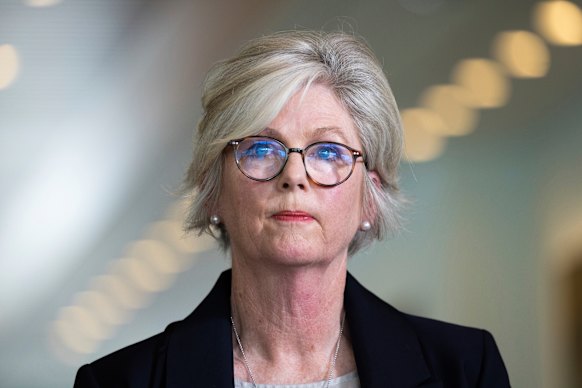
And now an attack of what appears to be an overt and targeted act of political violence – directed at independent MP Helen Haines – has brought that violence home to Australia.
How on earth Haines became a target for anyone is difficult to fathom.
Albanese looked visibly shaken as he confirmed the attack on Monday night and said a suspect had been arrested. A major police investigation is under way involving police and Victoria’s counter-terrorism unit.
Crucially, the prime minister said the motive of the suspect was not yet known and refused to speculate on what it might have been, but the presence of Home Affairs Minister Tony Burke alongside Albanese spoke volumes about what the government seems to believe has occurred.
Burke, for his part, noted that the number of reports of harassing and threatening behaviour against various high office holders had been 951, and in the most recent year that number had risen to 1067.
First and foremost, we must hope that Haines recovers from this attack.
But in the days and weeks ahead, it’s also time for Australia’s political leaders to lead a conversation about why more Australians are being radicalised and what can and must be done to head off further incidents of violence against political leaders, and indeed, more broadly within society.
The political class was already aware of the growing risks that MPs face; it’s time for the rest of us to grapple with the problems posed by radicalisation, extremism and the growing threat of political violence.
Social media companies, too, must not be let off the hook, given outsized the part they have played in providing platforms for and access to material that can radicalise and isolate people.
This attack has not yet been confirmed as politically motivated.
But it must be a turning point, and it is incumbent on all politicians to turn down the temperature of political debate rather than continuing a race to the bottom with cheap personal attacks and juvenile insults.
There must never be another incident like this attack on Helen Haines again.
Cut through the noise of federal politics with news, views and expert analysis. Subscribers can sign up to our weekly Inside Politics newsletter.
 James Massola is Chief Political Commentator. He has previously been National Affairs
Editor and South-East Asia Correspondent, and has won Quill and Kennedy awards and is the 2026 Press Gallery Journalist of the Year. Connect securely on Signal @jamesmassola.01Connect via X or email.
From our partners
Disclaimer : This story is auto aggregated by a computer programme and has not been created or edited by DOWNTHENEWS. Publisher: www.smh.com.au