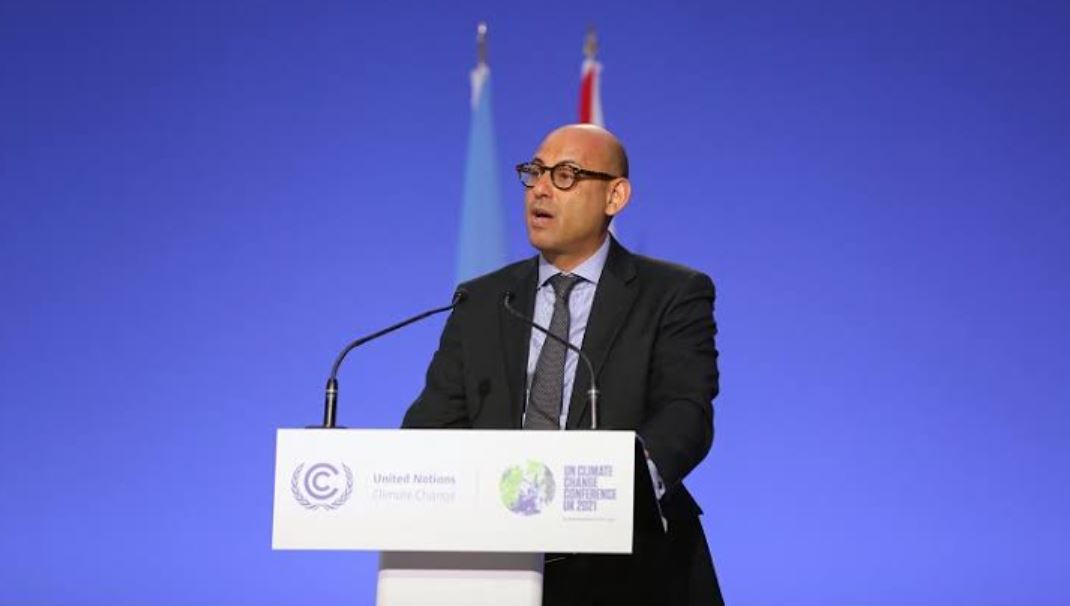
The glacial collapse and flash floods in the Himalayas this year should push everyone to act “faster and fairer” on climate change, a top United Nations official said. Responding to a question on the issue of the Himalayas on the sidelines of the UN Climate Change Conference (COP31) in Antalya,Turkiye, United Nations Framework Convention on Climate Change (UNFCCC) Executive Secretary Simon Stiell told PTI that transitioning away from fossil fuels in a just, orderly and equitable manner, along with tripling adaptation finance, are key to resolving the crisis.
“The glacial collapse and flash floods in the Himalayas this year are a devastating reminder of how fragile these mountain environments can be, particularly the Hindu Kush Himalayas. For years, scientists and local communities have been warning that the Himalayas are at huge risk from climate change. What is happening in the Himalayas should push us to act faster and fairer on climate change,” he said.
Proposals by Nepal and Bhutan, and separately by Kyrgyzstan, to secure formal agenda items on mountain-related issues at the 31st UN failed to secure the backing of major negotiating blocs.
Highlighting that global heating is caused by humanity still burning huge amounts of coal, oil and gas and destroying forests, the UNFCCC Executive Secretary recalled COP28 in the UAE, where all countries agreed to transition away from fossil fuels in energy systems in a just, orderly and equitable manner.
He stated that the agreement must be delivered in full, and that it is equally essential to make faster progress on helping nations adapt to climate impacts and build their resilience, especially vulnerable nations that did practically nothing to contribute to the climate crisis.
“That means delivering in full on the tripling of adaptation finance agreed at COP30 in Brazil last year. Full delivery on all existing financial commitments by developed economies is also essential, as is boosting access to finance for those who need it most, especially those vulnerable developing nations who did the least to cause the global crisis,” Stiell told PTI.
When asked how climate-vulnerable nations can trust a platform like COP given that the agenda on tripling adaptation finance failed to be formally adopted, he said that the Fund for Responding to Loss and Damage (FRLD) has been set up to provide support to vulnerable developing countries, adding that the crisis in the Himalayas shows why the COP process is critical.
“FRLD has been in its establishment phase; it has raised and received funds. The fund is now moving into delivery with an initial provisional allocation of USD 21.6 million for Nepal, which is a very positive step. It’s essential that FRLD continues to be capitalised and deployed to the fullest extent possible,” Stiell told PTI, adding that FRLD alone cannot meet the scale of loss and damage.
A standalone agenda item on tripling adaptation finance was not formally adopted on the official conference agenda, as consensus could not be reached during the opening plenary on November 9.
Noting that finance is key to turning climate plans into real-world results, he said that Nepal’s reported reconstruction needs underline the urgency to mobilise finance at a much greater scale, across climate finance and humanitarian, development and disaster-risk financing.
“The crisis in the Himalayas shows us why the COP process is critical. Without this process, humanity would be headed for well over 4 degrees Celsius of heating and much higher, which would decimate every population and economy. UN-convened climate cooperation – together with national efforts – has brought this projected global heating down to 2.6 degrees, if countries meet their climate pledges,” the UN official said.
He said that every recent COP has taken “significant steps” forward, and COP31 must do so too, with a strong focus on helping governments to convert their pledges and targets into outcomes, and with strong and balanced outcomes across both the negotiations and the Action Agenda.
“COP31 is about showing and driving real-world progress that can deliver more benefits to people in their everyday lives. That is why we are doing things differently this year. We are focusing more than ever before on practical solutions that help countries deliver on targets and pledges already made. This is being done through both negotiations and the Global Climate Action Agenda – two parallel and complementary tracks,” he said.
According to the UN Climate chief, the issues being negotiated can help lay foundations for more real-world delivery and implementation of pledges, through ambitious outcomes on mitigation, adaptation, climate finance and just transitions, whereas the Action Agenda is bringing governments, businesses, investors, cities and regions together to drive faster progress, and deliver more real-life benefits.
Citing the Turkish Presidency’s focus on electrification, he further underscored that by electrifying more of their energy use, powered by renewables and better grids, countries can reduce energy bills as well as pollution, which also improves people’s health.
“PM Modi’s recent announcement on the Green Energy Corridor to strengthen grids and battery storage is a major step forward that will deliver big dividends for India’s people and economy. Working hand in hand with electrification, clean energy protects economies from the ruinous rollercoaster of fossil fuel dependency,” he said.
He added that PM Modi’s recent comments about how investments in clean energy helped protect India’s economic growth despite the oil price shock crisis are very salient.
The Union Cabinet chaired by Prime Minister Narendra Modi approved Green Energy Corridor Phase-III (GEC-III) to strengthen India’s clean energy grid and push toward a target of 900 GW of non-fossil capacity by 2035.
Stiell said that the technology is already here, with up to 75 per cent of energy demand that can be electrified with solutions that exist today. “What we need now is to roll them out much faster, reaching far more communities in more countries, as we continue to expand access to electricity.”
Disclaimer : This story is auto aggregated by a computer programme and has not been created or edited by DOWNTHENEWS. Publisher: deccanchronicle.com