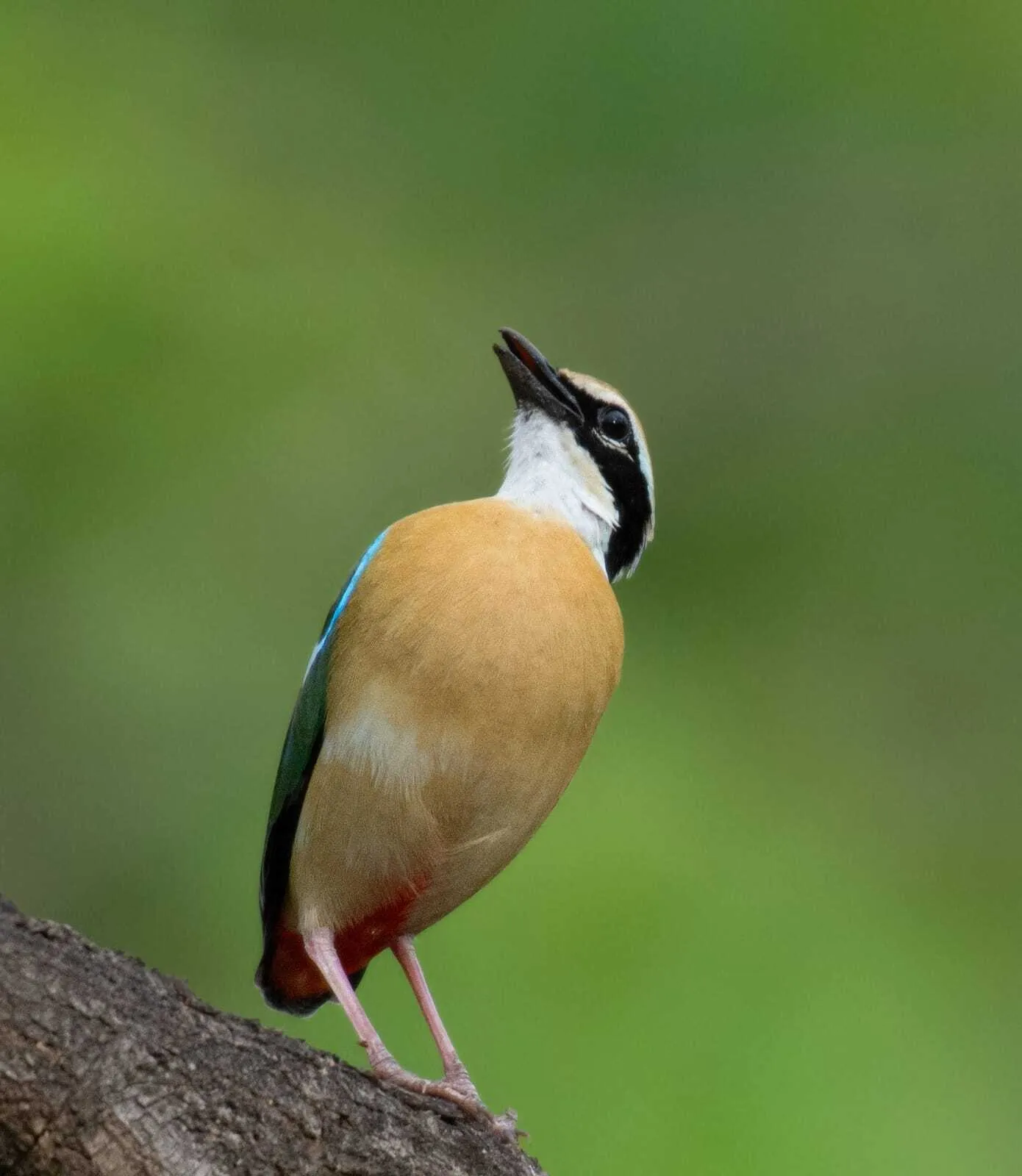
At daybreak in Sindhudurg, the air carries a soft chorus — the distant call of a hornbill, the chatter of barbets, the sudden flutter of wings rising from mist-covered wetlands. The Western Ghats descend gently here into the Arabian Sea, shaping a landscape where forests, plateaus, lakes, and coastlines meet. For those who know where to look — and listen — this quiet district reveals a spectacle that is anything but ordinary.
In the lush embrace of Maharashtra’s Sindhudurg district, a quiet revolution unfolded during the Great Backyard Bird Count (GBBC) 2025. Over three days in mid-February, citizen birders shattered records, documenting between 315 and 428 bird species — figures that vary slightly across reports but unanimously crown Sindhudurg as the state’s top district, far ahead of Pune’s 248.
The 2026 count concluded in March, and its report is eagerly awaited.
From lone enthusiasts to a movement
What began as a handful of solitary birdwatchers just a few years ago has grown into a collective of 40 dedicated observers, covering all eight talukas through meticulous surveys. This achievement is not just about numbers on an eBird checklist; it reflects how citizen science can transform an underrated Konkan hotspot into a national beacon — especially at a time when urban sprawl dominates much of the state.
Early GBBC years saw minimal participation. But sustained effort has built a thriving community that measures success not only by rising species counts — which naturally increase with more observers — but by the number of new participants and the reliability of data.
As birder Sachin Prabhu noted, “A total of 40 participants took part in this event,” covering Western Ghats locations such as Tilari, Talkat, Khadpade Ghat, Amboli Ghat, Mangleli, and Banda. Their work highlights Sindhudurg’s ecological advantage: a rich mosaic of forested Ghats, laterite plateaus in Devgad and Malvan, wetlands like Dhamapur, Pat, Pendur, and Oros lakes, and a 120-km coastline alive with seabirds.
Birder heroes and a growing community
Sachin Prabhu (34), from Oros, embodies this transformation. “In the initial years, there were only one or two of us. But now, quite a good number of bird enthusiasts are joining, and the objective is being fulfilled,” he said.
Prabhu topped the state with 264 species, coordinating efforts across 45 locations and 98 eBird hotspots, and producing 427 complete checklists. Fellow birders Makarand Naik from Sateli bhedshi village in Dodamrg tehsil, Sindhudurg district (233 species) and Pravin Satoskar (230) secured second and third place, respectively. Together, they led Sindhudurg to its third consecutive statewide win, adding three district-first sightings: the Large Hawk-Cuckoo at Talkat, the Central Asian Red-crested Pochard at Tilari, and the rare Asian Tit in the Amboli–Talkat plateaus.
/filters:format(webp)/english-betterindia/media/media_files/2026/04/23/orange-breasted-green-pigeon-2026-04-23-13-15-47.jpeg)
At just 29, Makarand Naik has already spent over half his life immersed in wildlife. Armed with a Nikon P950, whose powerful 83x zoom stretches close to 2000mm, he captures fleeting avian moments with precision. What began as childhood curiosity has evolved into 14 years of dedication, shaping him into a full-time photographer and naturalist.
Birdwatchers from Mumbai, Pune, and beyond often join him, drawn not just by his skill but by his enthusiasm for sharing the experience. During the 2026 GBBC, Naik recorded an impressive 233 species — a testament to patience, persistence, and deep familiarity with the landscape.
When asked about his favourite place, he reflects, “Every habitat has its own story. Each bird belongs to its own world. Choosing one spot would mean overlooking the beauty of another.”
Passion forged in place
These are not professional ornithologists but everyday locals — teachers, homestay owners, and nature lovers — who have used tools like WhatsApp groups and Bird Count India webinars to democratise discovery.
Prabhu emphasises accuracy: maintaining checklists of at least 15 minutes, avoiding uncertain “X” counts, and consolidating group observations carefully. Along the coast — from Malvan and Bhogwe to Mochemad and Shiroda saltpans — birders adapt methods depending on conditions: stationary counts for fly-bys, travelling counts for migrants, and block counts for dense flocks on low-tide sandbars.
/filters:format(webp)/english-betterindia/media/media_files/2026/04/23/vernal-hanging-parrot-2026-04-23-13-17-21.jpeg)
Organisations such as Wild Konkan, Mriganya Nature Expedition, Vanshree Foundation, and Youth for Climate Change have amplified these efforts, linking birding with livelihoods. Ecotourism has surged, with homestays thriving on simple, personal experiences — though sustainability remains a delicate balance.
As Prabhu points out, short-term spikes in bird counts can be misleading. The real indicators of success are growing communities of birders and the preservation of habitats.
Landscapes that invite life
Sindhudurg’s geography is its greatest strength. Positioned where the Sahyadri ranges meet the Arabian Sea, the district supports both endemic species — like the Malabar Grey Hornbill and Brown-cheeked Fulvetta — and migratory visitors from across continents.
Earlier surveys recorded around 307 species across coastal talukas. GBBC 2025 exceeded that, reflecting both increased coverage and the richness of habitats that remain relatively underexplored.
/filters:format(webp)/english-betterindia/media/media_files/2026/04/23/malabar-trogon-2026-04-23-13-17-36.jpeg)
Laterite plateaus host specialists like the Asian Tit. Wetlands attract ducks and waders. Coastal stretches bring in gulls and terns. The forested Ghats shelter a diverse array of resident birds.
Even as Maharashtra’s total bird diversity stands among the highest in the country, Sindhudurg’s performance underscores a key insight: lesser-known regions can outperform established birding hubs when given attention.
Signs of strain
Yet, this success carries a warning.
Prabhu observed, “The number of migratory birds appeared lower this year. In areas with higher human disturbance and settlements, the decline seemed more significant. Grassland habitats appeared at the highest risk of habitat loss.”
Tourism continues to expand in coastal areas like Tarkarli, but unchecked development threatens fragile ecosystems, especially laterite plateaus that support grassland species such as larks and pipits. Climate change is also beginning to disrupt migration patterns and seasonal rhythms.
Sindhudurg’s relative obscurity has meant less policy attention — but its GBBC success is beginning to shift that spotlight.
A call to notice, and to protect
Sindhudurg’s story extends beyond Konkan. With over 1,300 bird species recorded in India, initiatives like the GBBC help build a clearer picture of biodiversity across the country.
/filters:format(webp)/english-betterindia/media/media_files/2026/04/23/pintail-snipe-2026-04-23-13-17-59.jpeg)
This district’s leap — from historical counts of around 300 species to well over 400 — is not just a statistical achievement. It is a testament to citizen engagement, local pride, and the power of paying attention.
At its heart, birdwatching here is not about ticking off species. It is about slowing down. About noticing the call from a distant tree, the silhouette against a pale sky, the quiet movement along a wetland edge.
As Sachin and Makarand remind us, nature is not about choosing a single destination — it is about embracing diversity in every form.
And for those just beginning, birdwatching is more than a hobby. It is an invitation to look closer, listen deeper, and discover the extraordinary hidden in the everyday.
Disclaimer : This story is auto aggregated by a computer programme and has not been created or edited by DOWNTHENEWS. Publisher: thebetterindia.com