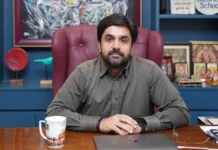
A former federal Labor MP appointed as Victoria’s key intermediary to the defence industry is also working at a lobbying firm that has clients in the sector, raising potential conflicts in the taxpayer-funded role.
David Feeney, a former Victorian senator, was late last year installed by the Allan government as Victoria’s “Defence Industry Advocate”. The part-time role, which pays a salary of $130,000, is designed to serve as the primary point of contact for global defence companies seeking to expand their footprint in Victoria and engage with government.
Simultaneously, Feeney continues to work as a consultant with lobbying firm Dragoman, which notes his defence credentials on its web page. Until mid-2025, Feeney was also an adviser to munitions and small-arms specialist Nioa, one of two contractors on a $19 million ammunition contract with Victoria Police.
Dragoman managing director Tom Harley confirmed Feeney’s ongoing role with Dragoman and said that they had discussed potential conflicts of interest.
“He wouldn’t take on a client that had a conflict with his advocate role,” Harley said. “He made it very clear when he was appointed to the defence advocate position that he would have potential conflicts of interest, and so we make sure to go nowhere near any sort of conflict.”
This masthead is not suggesting Feeney or the government has failed to appropriately manage any conflict of interest between his positions.
Feeney previously served as the nation’s assistant defence minister, and was also once a powerful factional figure within Victorian Labor – his influence peaking with the removal of Kevin Rudd as prime minister in 2010.
Feeney’s appointment is the latest high-profile example of a trend identified by The Age on Sunday, in which roughly one in 10 top public board seats in Victoria is filled by a Labor-linked figure. As well as being the state defence advocate, Feeney is also the board chair of the Defence Council Victoria.
On Sunday, asked about the board appointments, Premier Jacinta Allan defended the current process. “There is a thorough process that is always followed for board appointments and Victorian government boards have on those boards the best people for the job,” she said.
While the government argued Feeney’s recruitment was merit-based, the appointment comes amid broader concerns about transparency and a growing culture of political patronage across the state.
Catherine Williams, the executive director of pro-transparency think tank the Centre for Public Integrity, said in respect of public sector appointments generally that there needed to be “robust guardrails”.
This was, she said, “both to ensure that the best people are appointed to these important and often well-paid roles, and to ensure the public have confidence in appointments”.
Feeney has defence policy credentials – he was a parliamentary secretary for defence and later shadow assistant defence minister in Canberra – but his appointment was not marked by a formal Premier’s Office announcement. Others, including the 2017 appointment to the role of another former Labor MP, Greg Combet, were publicly promoted.
O’Callaghan said the role was officially part-time, but that the reality of the position often demanded a full-time commitment. “Even though I was part-time, I was travelling to Melbourne [from a regional area] two or three times a week.”
O’Callaghan said the position was crucial for the Victorian economy, and acted as a vital conduit between local and international defence giants seeking to work with the Victorian government.
“You’ve got Thales in Bendigo, you’ve got Lockheed Martin, BAE, Raytheon. Under each of them, they develop their own supply chains involved in advanced technology – there is a swag of companies that are subcontracted to BAE and Lockheed Martin.”
He said the advocate’s job was to be the direct contact with defence companies in Victoria, “to assist them in their advocacy with both the Victorian government and the federal government”.
There are defence industry advocates in every other state of Australia, with each state battling for federal defence funding. “You’re representing the interests directly of defence industry companies, and assisting ministers to understand the critical role of the defence industry in Victoria,” O’Callaghan said. “These are massive international players. And increasingly they are doing more work in Australia.”
A spokesman for Brooks said Feeney brought “strong capabilities and experience to the Victorian Defence Industry Advocate role”.
“As a former federal parliamentary secretary for and member of the Defence Council of Victoria, Dr Feeney will ensure Victoria is well positioned to deliver on the Victorian Defence Vision Statement and secure increased investment and trade opportunities for the state,” he said.
The spokesman said a public recruitment process was undertaken, including independent assessment and robust merit-based selection to ensure impartiality.
He said Feeney had “submitted himself to comprehensive probity and background checks,” including a full declaration of interests.
“Extensive processes have been put in place to mitigate any impacts of lobbying activities,” the spokesman said, noting that Feeney’s role with munitions company Nioa had finished several months before his state appointment.
Feeney has also held roles at the Australian Strategic Policy Institute and the Australian War College. He is married to state coroner Liberty Sanger.
Feeney left federal parliament in 2018 after he was unable to locate documents renouncing his British citizenship. He was the ninth MP at the time to lose their seat for being in breach of section 44 of the constitution.
Start the day with a summary of the day’s most important and interesting stories, analysis and insights. Sign up for our Morning Edition newsletter.
 Clay Lucas is an investigative reporter at The Age who has covered urban affairs, state and federal politics, industrial relations, health and aged care. Email him at clucas@theage.com.au or claylucas@protonmail.com, or via Signal +61439828128.Connect via X, Facebook or email.
From our partners
Disclaimer : This story is auto aggregated by a computer programme and has not been created or edited by DOWNTHENEWS. Publisher: www.smh.com.au