
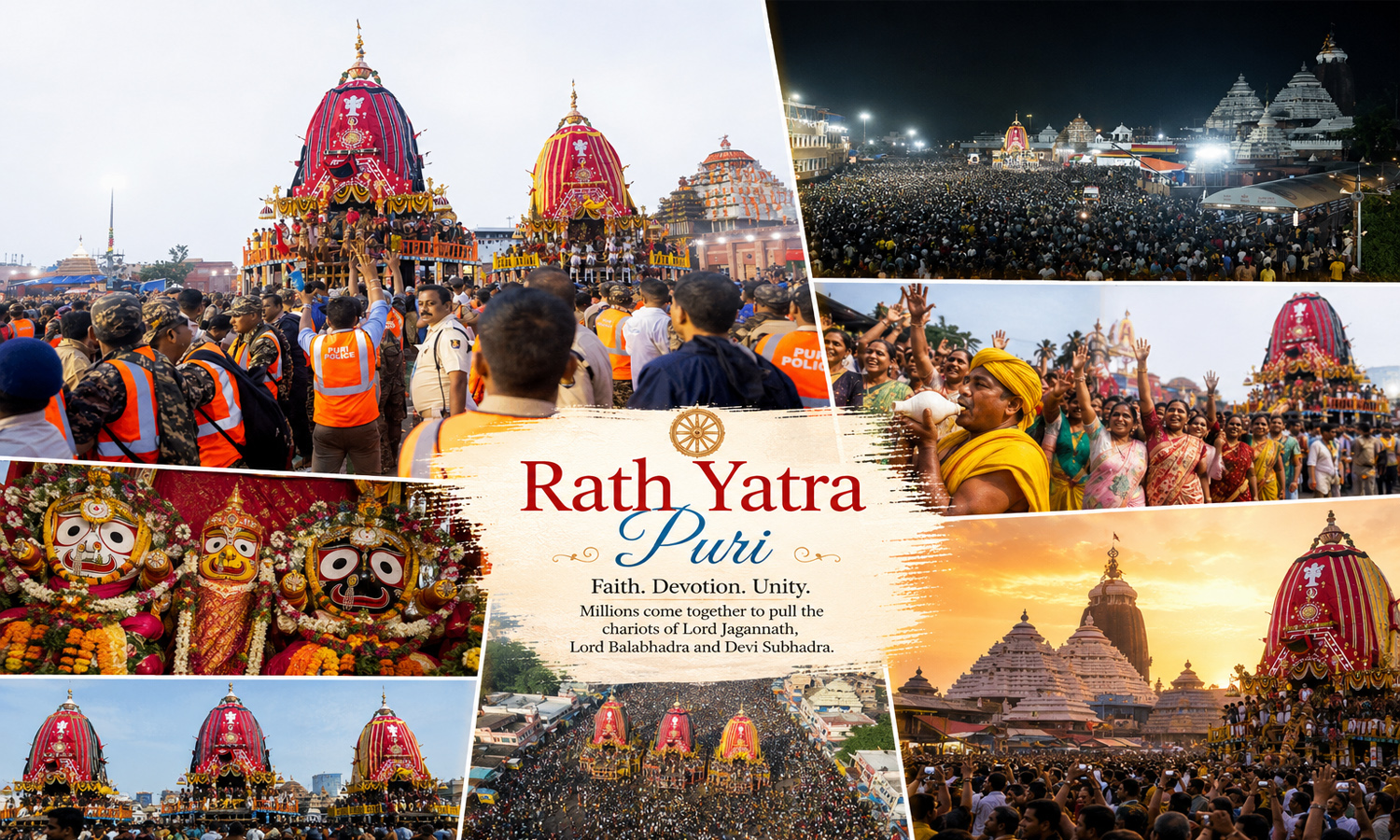
Bhubaneswar: The pulling of the majestic chariots of Lord Jagannath, Lord Balabhadra and Devi Subhadra resumed on Friday in Odisha’s pilgrim town of Puri, with thousands of devotees gathering along the Grand Road (Bada Danda) to witness one of the most significant rituals of the annual Rath Yatra.
The chariots had remained midway on Thursday after lakhs of devotees pulled them for only a limited distance during the inaugural day of the festival. The procession resumed early Friday amid tight security and elaborate arrangements by the state administration.
Devotees lined both sides of the Bada Danda, chanting “Jai Jagannath” and pulling the massive wooden chariots with thick ropes in an atmosphere charged with devotion and religious fervour. The sacred procession, known as Ghosa Yatra, marks the annual journey of the sibling deities from the 12th-century Shree Jagannath Temple to the Srigundicha Temple, about three kilometres away.
On Thursday, Lord Balabhadra’s Taladhwaja chariot halted near Market Chhak, Devi Subhadra’s Darpadalana stopped at Marchikote Chhak, while Lord Jagannath’s Nandighosha moved only a short distance before the day’s rituals concluded.
By Friday evening, the chariots were expected to reach Saradhabali, the sandy area in front of the Srigundicha Temple, paving the way for the Adapa Mandap Bije ritual scheduled for Saturday.
Adapa Mandap Bije is one of the most sacred ceremonies of the Rath Yatra. During this ritual, the idols of Lord Jagannath, Lord Balabhadra and Devi Subhadra are ceremonially carried from their chariots in elaborate Pahandi processions and installed on the Adapa Mandap, the sanctum inside the Srigundicha Temple. The ritual signifies the deities taking residence at their “birthplace” or maternal abode for their annual stay away from the main Jagannath Temple.
The Srigundicha Temple occupies a unique place in the Jagannath tradition. Revered as the birthplace of Lord Jagannath’s wooden manifestations, the temple is also popularly regarded as the house of the Lord’s maternal aunt (Mausi), symbolising the deities’ annual visit to their relatives. The week-long stay at the temple reflects the intimate and accessible relationship between the deities and their devotees, a distinctive feature of the Jagannath cult.
During their stay at the Srigundicha Temple, the deities are offered daily rituals and special forms of worship similar to those performed at the main Jagannath Temple. Thousands of devotees visit the shrine every day to have Adapa Darshan, considered highly auspicious. The deities are offered traditional bhoga several times a day, accompanied by Vedic chants, devotional music and elaborate temple rituals conducted by servitors.
One of the major attractions during the sojourn is the Sandhya Darshan, believed by devotees to confer immense spiritual merit. Another significant ritual is Hera Panchami, observed on the fifth day of the deities’ stay, when Goddess Lakshmi symbolically visits the Srigundicha Temple in search of Lord Jagannath after he leaves her behind at the main temple. The ritual, marked by age-old traditions and symbolic exchanges between the servitors of the two temples, draws large crowds.
The nine-day sojourn concludes with the Bahuda Yatra, or the return car festival, during which the sibling deities travel back to the Shree Jagannath Temple. On their return journey, they make a customary halt at the Ardhasini Temple, popularly known as Mausi Maa Temple, where they are offered the traditional Poda Pitha, a baked rice cake believed to be the Lord’s favourite.
The Rath Yatra, one of India’s oldest and largest religious festivals, attracts millions of pilgrims and visitors from across the country and abroad every year. The festival embodies the ideals of inclusiveness and universal brotherhood, as people from all walks of life come together to pull the chariots of the sibling deities, seeking divine blessings.
Disclaimer : This story is auto aggregated by a computer programme and has not been created or edited by DOWNTHENEWS. Publisher: deccanchronicle.com




