

Where there’s a will, there’s an executor – the person who manages your estate when you’ve died. Who do you choose for this important role, and how can you help smooth their way?
Deaths, like births, happen every day. And when someone dies, it sets off a chain of events. There’s grief, of course. Then there’s paperwork.
Often, the person who has died will have made a will, with instructions for how they want their worldly assets distributed. In it, they will have appointed at least one person to ensure their wishes are delivered on. This trusted person, called an executor, now has some work to do.
“Once you become an executor, you are the legal representative on Earth of the deceased. You stand in their shoes, legally speaking,” says Morgan Solomon, director of Perth law firm Solomon Hollett Lawyers. “This is a job of incredible legal responsibility and moral responsibility.”
No pressure, then.
Being an executor can be a handful. Sometimes a will can be hard to find, or it ends up being contested. The person who died might have kept patchy records or none at all, says Mal Gee, head of estate management at Equity Trustees. “We certainly have people who haven’t filled out a tax return for 15 years and their affairs might be all over the place.”

But executors don’t have to go it alone. “Many people assume that once they are appointed executor,” says wills and estate specialist Julia Tonkin, a partner at Maddocks law firm, “they are personally responsible for understanding tax law, property transfers, superannuation, trust administration and every other complexity of the estate. In reality, the executor’s role is one of oversight and decision-making – they are entitled and often expected to engage lawyers, accountants, financial advisers and other professionals to assist them.”
On the upside, taking on the role can be a final act of service to a loved one, even a way to ensure that vulnerable beneficiaries are protected. “I haven’t found it difficult, I’ve just found it to be a process,” says Steve Burke, a semi-retired IT professional from Melbourne who has been an executor for two family members in the past five years. “I’m not sure how many more times I want to do it,” he laughs. “I know I’m named in my brother’s and sister’s [wills] so if that ever happens, I’ll do it. I haven’t found it too daunting. I just think it’s part of life, so I’ve accepted it – although I know some people would hate it.”
This Explainer does not cover every scenario an executor can encounter, nor the myriad rules and legalities in this area, but it does aim to offer some insights into the executor’s role. What is the scope of your responsibilities? How do you deal with curly challenges? As a will-maker, how can you help your executor before they have to swing into action on your behalf?
The will-maker has died. What’s an executor’s first task?
An executor’s job is, in essence, to execute the wishes in a person’s will. There’s no legal requirement to tell someone you’ve nominated them, but it’s ever so helpful if you do. Either way, when the person dies it won’t be long before a solicitor or a family member gets in touch with you.
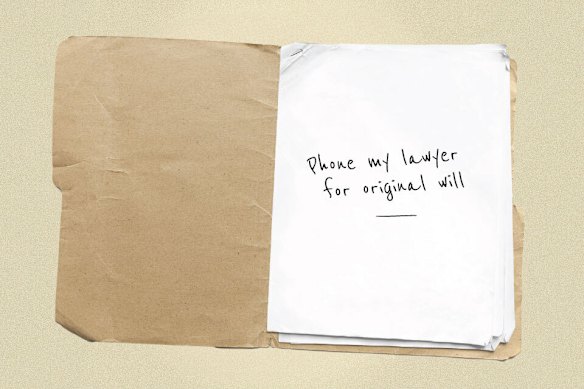
Once you become aware of the death, you need to find the original version of the person’s will. That is, not a photocopy but the one where the signatures have been inked. Top tip: they’re often held by a person’s solicitor. You also need to be confident it is the most recent will the person made. A dog-eared will dated 1965 might not be a person’s last.
“It is essential to have the original will,” says Solomon. If you don’t, courts tend to presume the will-maker destroyed the original or intended for it not to be found. It will be for you to rebut this. “So if all you can find is a copy, then you can sometimes persuade the court that the original was not revoked, just misplaced – if you have enough evidence.” (The evidence will vary according to your situation.)
The original will is one of the documents that you, or your solicitor, will present to the Supreme Court in your state or territory in due course, for them to grant you probate (from the Latin probatum, “a thing proved”) which, in effect, is a court order to say you can get on with administering the estate. You will also need to show the death certificate; an account of the person’s assets and liabilities; and the contact details of anyone named in the will.
We’ll come back to probate shortly. For now, will-makers can save their executor a stressful hunt by simply telling them where the original will is stored, as well as by keeping their will reasonably current (reflecting new relationships, for example, and ensuring named executors are still alive and well) and getting rid of old copies.

What if the original can’t be found? Five years ago, Steve Burke and his mother, Patricia, were asked to assume control of the estate of his younger brother Wayne. The pair couldn’t find Wayne’s original will. “It was quite old,” recalls Burke, “and my father, who had arranged it for his son, had already passed away. So there was kind of no trace of it.”
But they had copies and could tell the timeframe from the witnesses on it, “so we were sure we had the right one”. After thorough inquiries, he and his mother hired a lawyer to submit evidence to a court that the copy was his brother’s intended will. All of this pushed out the time it took to administer the estate. “It took about 15 months in total,” says Burke.
If there is no will – as is the case with nearly half of Australians – a person is known as dying “intestate” and a court will appoint someone to administer the estate, which could be an official from the state trustees or the person with the greatest entitlement, depending on each state and territory’s laws. Either way, it’s not the deceased’s choice of executor, notes Solomon.
What’s the executor’s role in organising funerals?
This brings us to a second important document: the death certificate. When someone dies, except in certain circumstances, their body will usually go to a funeral director. In most cases, the funeral director will register the death with the state’s births, deaths and marriages registry and apply for a death certificate. If not, that job falls to the executor.
It’s a good idea for an executor to get certified copies of the death certificate – which they can order from the birth, deaths and marriages registry in their state – because they’ll need it to administer the person’s estate; you’ll be asked to produce it in your dealings with all sorts of institutions, such as banks, who will want to secure the accounts against, say, third parties trying to access them.
It also falls to the executor to see to the short-term financial needs of the dead person’s family, including sorting out payment for a funeral service and burial or cremation. The National Funeral Directors’ Association says a basic cremation starts at about $4000 while a more elaborate burial service can be north of $15,000.
‘You have this kind of twilight zone where no one can act on anything between the date of death and probate being granted.’Mal Gee, Equity Trustees
Strictly speaking, once they are notified of a death, institutions such as banks will freeze all assets of the dead person until a grant of probate is made by a court. Unless someone had a joint bank account with the deceased, the only person who can access their funds is the executor. Banks will pay from an account directly to the funeral home, says Solomon. If an account balance is small – less than $10,000 – banks will generally allow it to be closed without probate. But if an account has more, banks generally won’t allow release of the dead person’s funds, except for the funeral, without probate.
By the way, will-makers, let your executor and family know the details of any prepaid funeral, funeral bond (an investment product that lets you set aside funds for a funeral) or funeral insurance (which pays a lump-sum benefit when you die) that you might have put in place.
Executors have to navigate all sorts of practicalities before funds can be distributed from the estate, finally. “You have this kind of twilight zone where no one can act on anything between the date of death and probate being granted,” explains Gee, “because nobody really has authority.” In this twilight zone, “cash flow is a challenge for the executor because there are expenses that are going to continue to be incurred,” he says. “Or you can rack up debt [on behalf of the estate]. You can just not pay the council rates and get notice after notice, and incur costs, charges and fees – and, ultimately, that will come out of the estate once we have assets to spend.” The executor might also arrange with creditors, such as schools, to defer payment until estate funds become available.
How do you pull together a financial inventory?
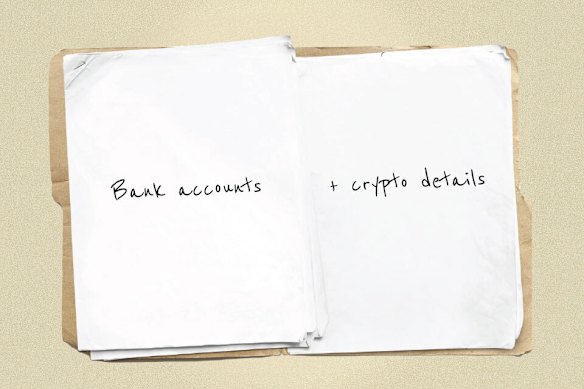
Executors must make a list of the deceased’s assets and liabilities at their time of death. This is where we get into “hire an accountant” or DIY spreadsheet territory. “Sometimes it’s not knowing what’s out there,” says Gee. “They might have a Sportsbet account that has $10,000 in it, so how do we get to that? Or cryptocurrency, unless you’ve got the SuperPasskey, and you need the actual computer that they bought it on sometimes.”
Will-makers can help their executors by ironing out bamboozling financial arrangements and writing down stuff. Ian Bowie, 86, from Bowral in NSW, was executor of his mother’s estate decades ago. He found it straightforward because his sister, who was his co-executor, had spent time helping their mother put her affairs in order. “My sister really made it very easy for us all,” he says. For his part, Bowie has redrafted his end-of-life documents to ensure his children, who are his executors, have all the information they will need. He’s compiled email contacts, account numbers, passwords, periodic payments and more – seven pages of it.
‘It can be difficult … to accept that others may well have to make difficult decisions about ourselves and our property. But we should not make these things harder than they need to be.’Ian Bowie
“Terrifying to do it,” he says, but he advises others, especially of his vintage, “I know we have to be careful with who gets to know what, and it can be difficult for oldies to accept loss of capacity as we age, to accept that we need to share information with those we trust, to accept that others may well have to make difficult decisions about ourselves and our property. But we should not make these things harder than they need to be.”
Bowie has also told his children not to hesitate in getting professional help to manage his estate when he is gone. As Solomon reminds us, while the executor is legally responsible for getting the thousand and one tasks of estate administration done, they can delegate. “All too often we have an executor come into our office who bemoans how they have to go and mow the lawn and water the pot plants of their deceased mother’s home,” he says. “They can employ a gardener, or even ask a friend to go and do it. The executor does not have to actually shoulder the burden, just organise it.”
One trick for new players relates to capital gains tax. When an inherited asset is sold, including by the executor where the proceeds go to the estate, or later by a beneficiary, “the market value of each asset (including real estate, shareholdings, jewellery, artwork and vehicles), needs to be determined as at the date of death, Equity Trustee advises. “You will also need the asset cost to calculate capital gains/loss to be reported on the relevant tax return.” Gee says to find the cost of shares and investments, his team “traces back through share registry records, any other records that the family may have – literally shoeboxes – or old bank records. You would be surprised what people keep.”
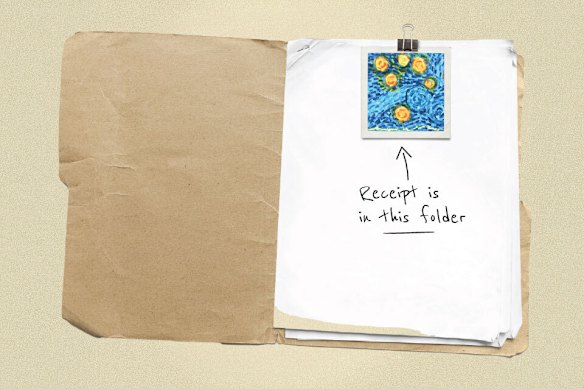
‘If Dad bought the Van Gogh in 1950 and we’re selling it today, do you need to get the cost base? Yes, you do. There are laws around collectables.’Mal Gee, Equity Trustees
If there are no receipts, lay executors need to make an effort to value the assets, but the numbers don’t need to be perfect. “If Dad bought the Van Gogh in 1950 and we’re selling it today, do you need to get the cost base? Yes, you do. There are laws around collectables,” he says. “If you can’t find the receipt for the Van Gogh, would you get an art collector [to value it]? Yes, that would be sufficient for the Tax Office.”
Recent changes flagged in the federal budget in May are, for now, a watching brief. The government plans to overhaul capital gains tax and introduce a 30 per cent minimum tax on discretionary trusts from July 1, 2028, including testamentary trusts, common in wills (which is where a trust holds assets for a beneficiary rather than them holding them directly). At the time of writing, this was yet to be made law. “The prudent approach for executors is to seek professional advice, avoid premature distributions and treat the position as a ‘watch this space’ until the final rules are clear,” says Tonkin.

Sometimes the biggest bugbear for executors is dealing with the many and varied administrative rules of organisations that had a relationship with the deceased. Melbourne man Andrew Cameron has served as an executor for his mother, his partner and a friend, and expects to be executor for his brother. The pace of dealing with institutions could be glacial, he says. “What they wanted was provided quickly, they just didn’t seem to want to invest in speeding things along,” he says. “The time it took was outrageous, in my opinion. It took well over a year for a fairly straightforward estate.” One tactic to expedite paperwork that he advises: “If the place has an office, go there. They can cut through so much more quickly when you’re in person.”
Executors might also have to deal with the person’s shareholdings held in registries. “People’s estates can be complex, and their instructions are often unclear,” says a spokesperson for share registry Computershare, which has a dedicated team to help executors. The magic numbers that share registries will ask for are the Shareholder Reference Number (SRN) or the Holder Identification Number (HIN). These are provided to the shareholder at the time they buy the shares and in subsequent documentation. Again, will-makers, keep records. Where shares are held through a broker or nominee, the executor must work directly with that broker, who is responsible for processing any transfers or sales.
Super doesn’t automatically form part of your estate – unless it lands with your executor (in super language, your ‘legal personal representative’).
Where does superannuation fit in? It doesn’t automatically form part of your estate – unless it lands with your executor (in super language, your “legal personal representative”). Super funds vary, so check with yours. With many funds, if you haven’t submitted a “legally binding nomination” – a form that requires two witnesses and which may need to be renewed every few years, depending on your fund – then the super fund decides who to give your money to. With a legally binding nomination, you can direct your money (or percentages of it) to a partner, a child, or a person who has lived with you in a close relationship, known as an interdependent, or to your legal personal representative, but not to friends, siblings, nieces and nephews and so on. If you opt to direct your super funds to your legal personal representative, it is then carved up according to your will – in which you might have named that niece, nephew or friend.

If you do nothing, or you make a “non-binding nomination”, or you don’t fill out the nomination form correctly, the trustee of the super fund has discretion to either give the money to one or more of your dependents anyway (a spouse, child, person in an interdependent relationship) or to your legal personal representative, who follows the instructions in your will.
What about closing online social media accounts? It’s not particularly an executor’s job. In any case, the eSafety Commission has a helpful how-to list for those who wish to do this as well as advice for the living who have wishes in this area. (As for paper mail, Australia Post provides free mail redirection for deceased estates for up to 12 months. Executors must apply in-store, with a copy of the grant of probate.)
How to streamline closing accounts
The Australian Death Notification Service is a free website that helps executors close or transfer the accounts of dead people. The executor provides details about the deceased person to pass on to more than 80 organisations, including banks, super funds, utilities, insurers, councils and government departments. These organisations will then contact the executor within 10 business days to verify the executor and deceased person’s information, and start the process of closing or transferring accounts.
Frequent-flyer points? People who would like to inherit a family member’s Qantas Frequent Flyer points must apply within 12 months of the person’s death. Virgin will transfer points if the deceased member has left instructions for this to happen.

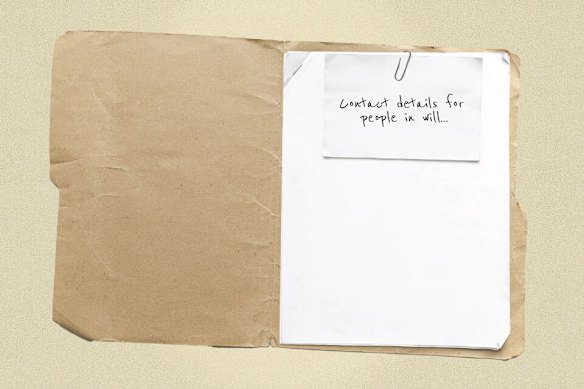
Another executor task: tracking down the people named in the will. Executors have to use their best endeavours or they could be liable later if, say, a missing beneficiary surfaces and wants their share. “We’ll use genealogy businesses to search for people,” says Mal Gee. “It’s easier now than it’s ever been. You can use electoral records, Google, Facebook.” (Will-makers can short-circuit hassle by leaving a note of up-to-date contact details of people named in their will, especially if they are outside the orbit of family.) With a will, death certificate, financial breakdown and list of contacts in place, the executor (or lawyer) can apply for probate.
‘Often we’ll meet the beneficiaries for the first time … and we’ll say that this is probably a 12 to 18-month journey that we’ll be on before it’s all finalised.’Mal Gee, Equity Trustees
But wait, there’s something else. The law leaves a window of time for people to contest a will: six months after probate in Victoria and Western Australia, for example, 12 months after the death in NSW. Executors are required to defend any legal action against the estate, with funds from the estate. Typically, the challenges come from people who say the will-maker failed to provide for their necessary maintenance and support (known as family provision) or who argue the will was invalid because it was, say, forged or signed by the will-maker under duress. An executor can be held personally liable if they have gone ahead and distributed funds only to find a successful claim has been made on the estate.
All in all, administering an estate can take more than a year. “Often we’ll meet beneficiaries for the first time,” says Gee. “It’s often the family, the children, and we’ll say that this is probably a 12 to 18-month journey that we’ll be on before it’s all finalised.”
Once probate is granted and nobody has contested the will, we hit the downhill run: paying any debts and liabilities; reimbursing any party who has paid an estate expense from their own funds; lodging any outstanding tax returns for the will-maker. The executor distributes the estate as the will-maker set out, along with a full account of the administration of the estate to each of the beneficiaries. Then the executor can close the estate bank accounts. And have a stiff gin and tonic. Phew.
So, how do you choose an executor?
Executors need to be scrupulously honest, organised and patient – they have a legal duty to put the interests of beneficiaries and creditors ahead of their own. “There’s usually a very, very small handful of people that you would trust with this,” says Solomon. “One thing I see more frequently than I should is that there’s a very large quantity of people that don’t really understand what executorship is, what its actual limitations are. And they have in their head this idea that being an executor is an open chequebook. And for some people, that even extends to going so far as to deciding they’re going to rewrite the will … Just not doable. It’s fraud.”
If an executor messes up – selling property under market value, for example – they can be liable to the beneficiaries for the loss. “People don’t realise you’re appointed as executor in perpetuity, so forever you remain the executor,” says Gee.
Executors can “quit” by filing a form to the Supreme Court in their state, preferably before dealing with the estate. Common reasons include that they’ve moved interstate or overseas, they are too busy, they don’t want to deal with probable family conflict, or they are turning green at the thought of going knee-deep into tax and legal affairs. They might have no idea you named them executor in the first place.
‘If you can appoint two executors, I think that that’s a great outcome. They can split the tasks up … [and] it provides a second set of eyes.’Lawyer Morgan Solomon
Appointing a professional executor can reduce tension, speed things up and ensure the will-maker’s wishes are carried out in full. The sting is it costs. Equity Trustees charge between $31,000 and $35,000 to administer a typical deceased estate worth between $800,000 and $900,000. “It can be confronting for a newly deceased person’s family to realise they had appointed a professional to manage their estate,” says Gee, but “our obligation is 100 per cent to the testator [will-maker]. We are their voice once they’ve gone.”
For those non-professionals who say yes, says Tonkin, remember that “the person who appointed you considered you to be someone of sufficient integrity, capability and care to manage their affairs after death”. She advises will-makers to reduce the burden on their future executor by simplifying their affairs: get rid of redundant accounts, companies or trusts, and ensure any trust deeds and company constitutions have successor provisions in place.
How many executors is the right number? One equals a huge workload; three can lead to deadlocks (they must all agree on decisions, unless the will states otherwise). “If you can appoint two executors, I think that that’s a great outcome. They can split the tasks up, and so reduce the labour component of each,” says Solomon. “But more importantly, it provides a second set of eyes, which both increases the judgement of good decisions, but also stops malfeasance.”
Are parents better off bypassing their children? Solomon says yes, if they wouldn’t be able to get along during the often emotional process. “If you know that there’s going to be this dispute, perhaps don’t appoint any of them. You go to somebody else.”
Some wills specify that lay executors should be paid for their troubles. For wills that don’t, executors can apply to their Supreme Court. “An executor and trustee can apply to the court for commission for their time and trouble in dealing with an estate,” says Solomon, “and it’s a sliding scale based on complexity and size of estate.”
Steve Burke did not accept payment for acting as executor for his brother, but hired lawyers and tax agents to ease the workload (paid for by the estate). Burke is doing his mother’s estate by himself this time, and expects to finalise it later this year, shortly after selling her house. “I’ve heard of things dragging out for years, with unknown beneficiaries or challenges, but we haven’t had any of those things so it’s been relatively straightforward,” he says.
He suggests anyone appointed as an executor to “take it small bites at a time”. His mother had her affairs in order – the family knew where her important documents were kept. “For people who have elderly parents, it’s probably worth getting in front of the curve in terms of paperwork and so on, so you know where stuff is before people pass away.”
The experience has certainly prompted him to prepare for his own demise. “My family knows where all of our paperwork is. I’ve encouraged my kids to do the same. I’ve helped my sister and brother to update their will. So yes, it has prepped me.”
The advice given in this Explainer is general in nature. Everyone’s circumstances are different. Always seek your own professional advice before making legal or financial decisions.
Get fascinating insights and explanations on the world’s most perplexing topics. Sign up for our weekly Explainer newsletter.
Disclaimer : This story is auto aggregated by a computer programme and has not been created or edited by DOWNTHENEWS. Publisher: www.smh.com.au


