As spring moves toward summer, parks and open spaces around Germany become the site of loud and wild ‘open-airs’. Here’s your guide to the outdoor day parties to catch this year, and a few tips for making the most of them.
Far from the commercial polish of Coachella or the scale of Glastonbury, Germany’s ‘open-airs’ remain closer in spirit to the raves of the 1990s.
To the uninitiated, an open-air is basically what an Anglophone might otherwise call an outdoor rave, concert or day party. In German the term can sometimes used widely for any outside gathering around live music, including everything from rogue dj-sets in the woods to large parades and day festivals attracting thousands.
Typically free to attend, these outdoor events are often hosted in ‘interim-use’ (Zwischennutzung) spaces — from abandoned bunkers and power plants to park corners and old racecourses — which can make a party feel more like a collective discovery rather than a ticketed commodity.
A brief history of Germany’s open-air culture
The DNA of Germany’s open-air scene was formed in the vacuum left by the geopolitical shifts of 1989. From the massive coal-scrubbing plants of the Ruhr region to the abandoned bunkers in the East, Germany was a country with a surplus of “interim” spaces with no clear owners and even fewer rules.
After the fall of the Berlin Wall, the reunited capital became the movement’s global laboratory. People craved radical freedom after decades of restrictions and economic uncertainty, and the city provided the canvas: Industrial “no-man’s-land” strips along the former Wall and vast, urban voids left over from World War II meant there was space to gather.
Add low costs of living and an atmosphere of seismic political change to the mix, and the 1990s gave birth to a decade of wild parties which have since become a cultural phenomenon.
READ ALSO: Berlin’s techno scene added to UNESCO World Heritage list
Similar scenes developed in other major German cities around that time.
In Frankfurt, the scene was fuelled by the “Sound of Frankfurt” and the influence of American GI culture; in Leipzig, the “Distillery” emerged from the city’s industrial ruins; and in Munich, the sprawling grounds of the former Riem Airport became a stalwart for early rave culture.
Today, that spirit, though increasingly under threat, survives in Germany’s underground music scene. You won’t always find big names, professional sound systems or even a bar. But you will a sense of freedom, some great music and a crowd of like-minded souls united in the thrill of being in the right place at the right time to enjoy an amazing party.
The unmissable open-airs of spring and summer 2026:
With spring in full swing, the first wave of announcements for the 2026 season has arrived.
While the high-production giants like Lollapalooza Berlin (July 18th-19th) and Nuremberg’s Rock im Park (June 5th-7th) are already locked in, the true “open-air” season is defined by the smaller, more transient events that pop up in Germany’s urban voids and green belts.
Here are some of the key events you wont want to miss, along with the “insider” rules for navigating the season.
Munich
Galopprennbahn Riem (May 9th): The season officially kicks off at the racecourse. Expect two stages and heavy festival vibes for the Isle of Summer Opening.
Praterinsel (May 14th): An open-air festival right in the heart of the city, spread across the scenic island in the Isar river.
Königsplatz (May 30th): The legendary Solomun returns for a massive open-air set in one of Munich’s most grand, historic squares.
Isle of Summer Festival (June 13th): The big one. Head to the Olympia Reitanlage Riem for a full-scale electronic music takeover.
Berlin & The East
Kunstkraftwerk, Leipzig (May 9th): A free day rave hosted by the Groovers collective. Industrial aesthetics meet house music in this former power plant.
Carnival of Cultures (Karneval der Kulturen) (May 22nd–25th): Berlin’s most iconic free street festival. The Sunday parade is the peak, with over half a million people following decorated trucks through Neukölln and Kreuzberg, and open-air parties spilling out from the parade to the surrounding parks in the afternoon.
Glasfabrik, Leipzig (May 31st): Who said an open air had to be wild? This “Day of Relaxation” features open studios and a sauna, ideal for those looking for the more experimental side of the scene.
Fête de la Musique (June 21st): The summer equinox sees the entire city turn into a stage. It’s the one day you can find a professional orchestra on one corner of the Kiez and a hardcore techno DJ on the next, all for free.
Berlin Beats at Hamburger Bahnhof: For a more curated “art-meets-club” vibe, the museum garden transforms into an open-air electronic stage featuring some big-name international DJs. Dates for 2026 are still to be confirmed.
Train of Love (Zug der Liebe) (August 29th): The “Train of Love” is the spiritual successor to the old Love Parade, combining non-stop electronic music with political activism. It generally starts in Eberswalder Straße near Mauerpark before travelling through Prenzlauer Berg and Mitte. Expect madness.
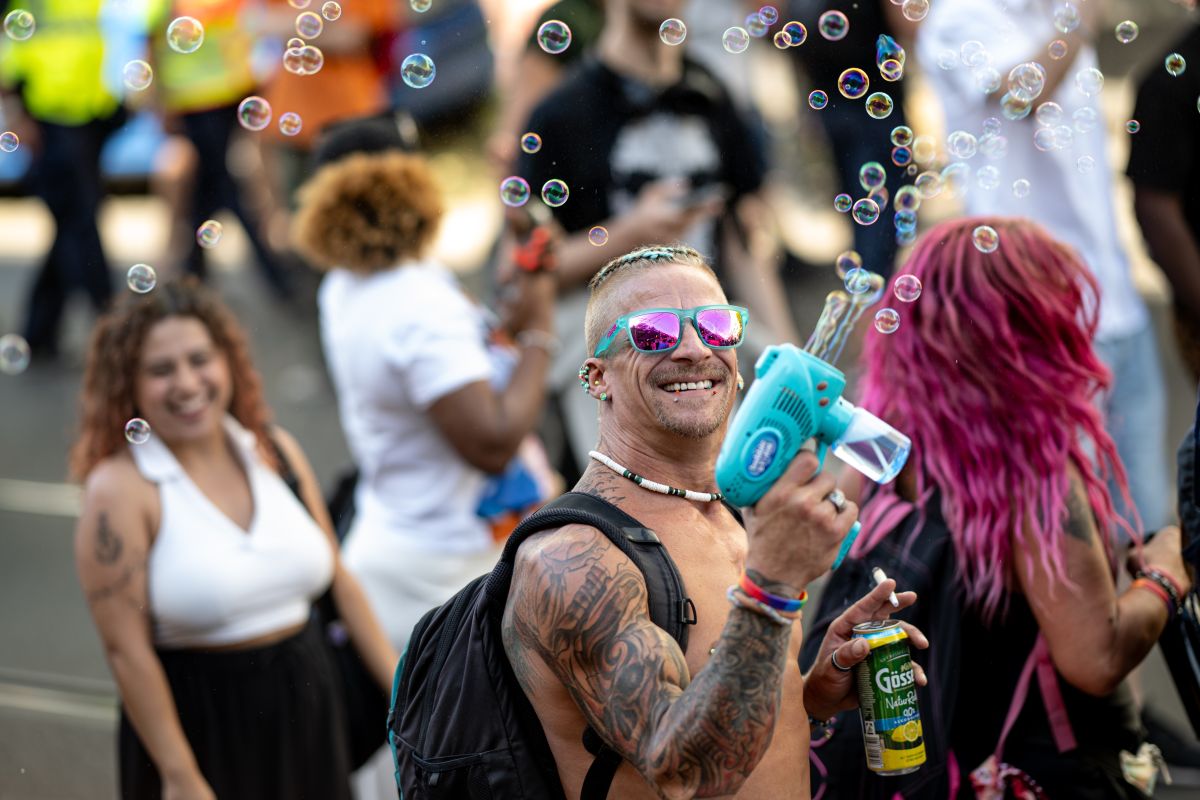
A person shoots soap bubbles into the air at the techno parade “Train of Love”. Photo: picture alliance/dpa | Fabian Sommer
Berlin’s open-air clubs: While “open-airs” often imply a one-off event or a pop-up in a park, Berlin’s club scene has mastered the art of the permanent outdoor sanctuary. Berghain, About Blank, ELSE, RSO and most famously Sisyphos, with its sprawling outdoor area are great options if you’re committed to an alfresco boogie without faff.
The beauty of these venues lies in their seamless transition from day to night. Arrive at 2 pm on a Saturday for a standard entry fee, spend the afternoon dancing in the sun, and as the temperature drops, follow the bassline indoors to the main rooms.
READ ALSO: Six uniquely German music festivals you won’t want to miss in spring 2026
Cologne & The West
Bikini Beach (May 1st): Regular open-air sessions kick off here from the start of May. It’s the go-to for sand-between-your-toes clubbing in Cologne.
Kessel Sued / Südbrücke (May 2nd): Look out for the Electronic Garden of Love. It’s a boutique open-air at the Südbrücke starting the season with melodic house and techno.
Hamburg & The North
Hamburg Open Airs (May): Keep an eye on Edelfettwerk for beach-style industrial parties and Café Schöne Aussichten for their “Daylight Discotheque” series.
Paul Kalkbrenner (June 27th): In a major highlight for the 2026 season, the Heiligengeistfeld on St. Pauli will be transformed into a “monumental open-air stage.” This is Kalkbrenner’s only exclusive concert in Hamburg this year.
Hot Meal x AOS – Summer Escape (July 4th): For those seeking a return to the “temporary” spirit, this collaboration is a key date. Following the classic underground playbook, the venue remains TBA.
Tips and logistics
While major spectacles like Solomun at Königsplatz or the Isle of Summer require advanced tickets and planning, much of Germany’s—and specifically Berlin’s—outdoor magic is more spontaneous.
From May through September, the scene is littered with “secret” pop-up stages and ad-hoc forest raves.
How to find them: The locations of the truly underground open-airs are rarely advertised.
For the most authentic open-air parties, check Resident Advisor or join local Telegram groups (like Spree Ravers or Flakturm Musik) roughly 24 to 48 hours before the weekend begins. This is where pins are dropped, and secret lineups are revealed.
Bring your own supplies: A major perk of German street festival culture is the relaxed approach to food and drink.
For free public events like the Carnival of Cultures or Fête de la Musique, you are generally welcome to bring your own supplies. However, keep in mind that these festivals are often supported by local vendors; buying a ‘Wegbier‘ or a Bratwurst from an on-site vendor is one way to support the scene.
Family vibes: If you’re travelling with a younger crew, the Carnival of Cultures is the gold standard. The vibrant costumes and decorated trucks make the Sunday parade a sensory delight for children.
Pro-tip: The parade routes get incredibly dense, so arrive early to snag a spot on a side street or near a park edge to ensure you have a clear view without being overwhelmed by the crowd.
Disclaimer : This story is auto aggregated by a computer programme and has not been created or edited by DOWNTHENEWS. Publisher: thelocal.de