TEHRAN – As though the Israeli regime had not already taken enough Palestinian lives, it now appears to be employing new methods to harm and kill them.
Apart from issuing statements of condemnation, the international community has remained shamefully inactive over the past three years amid a genocidal war. At best, the most it has done is walk out while war criminal and fugitive from international justice Benjamin Netanyahu delivered his speech at the UN General Assembly.
The departure of delegations of more than 80 countries from the UN General Assembly hall appeared only to fuel his arrogance and defiance. He seems to understand better than anyone that such walkouts are largely a matter of protocol. They serve to preserve the dignity of certain governments in the eyes of their powerless populations.
In devastated Gaza, where residents face death morning and night, the Israeli Occupation Forces (IOF) have begun using new methods to place further pressure on civilians. These measures deprive them of even the slightest hope of a safe and stable life.
They are deprived not only of safety, but also of the possibility of enjoying good health, something that could help them cope with the enormous hardships of daily life. Their lives are already defined by killing, bombardment, and displacement.
Critics say these measures are intended to force Palestinians to leave their homeland when the time eventually comes. However, that moment appears to have been postponed for now.
Over the past week, residents of Gaza City, or what remains of it, have reported a strong and unpleasant odor spreading at night. Residents have described it as resembling the smell of decomposing bodies. They say the odor is intense and can cause nasal and respiratory discomfort, particularly among people with pre-existing respiratory or cardiovascular conditions.
When the odor first appeared in the middle of last week, residents initially believed it was caused by large quantities of garbage accumulating in the streets and roads. Municipal workers have been unable to collect the waste because of shortages of fuel and spare parts for the trucks and machinery needed for the job.
Others suspected that sewage was overflowing from its usual channels because of severe damage to the sewage infrastructure caused by the IOF.
Both problems have already had serious consequences for public health. They have also created conditions conducive to the spread of rodents and stray animals. These animals now compete with Palestinians for space around their makeshift tents and, in some cases, for the limited food available to them and their children. The vast majority of Gazans are suffering from malnutrition.
However, as the smell continued to return on subsequent nights, residents and relevant authorities began searching for its source. The fact that the odor disappeared at dawn led investigators to rule out garbage and sewage as the likely causes. Both remain present during the day as well as at night.
After extensive inquiries, the source of the smell was traced to plastic containers dropped by IOF quadcopters near residential areas. This conclusion was based on observations and accounts from dozens of eyewitnesses in eastern Gaza City, particularly those living along the western side of Salah al-Din Street, as well as people in the southwestern Jabalia refugee camp and areas west of Beit Lahia.
According to these eyewitness accounts, some of the containers explode in the air, allowing the resulting odors to spread over a wider area with the wind. Others are said to fall to the ground and burst upon impact, dispersing the odor throughout the surrounding area.
Most Palestinians in these areas live in worn-out tents that provide little protection from the odors or reduce their intensity. So far, no one has been able to determine exactly what these containers contain, which substances they may hold, or what effects the resulting odors could have.
It is also unclear whether their purpose is simply to make civilian life more difficult or whether exposure to the substances causes lasting health effects. This is particularly concerning for people already suffering from illnesses and other health conditions that have left them physically weakened.
According to some medics, there is speculation that the substance may be “skunk,” a chemical agent that the IOF used during the Great March of Return protests along Gaza’s eastern border in 2018–2019.
“Skunk” is an extremely pungent, foul-smelling substance that is classified as a non-lethal chemical agent. It was developed by the Israeli company Odortec and has been used by the IOF as a form of collective punishment to disperse protesters.
Other health officials, however, question whether the substance being released from the air is “skunk,” particularly in light of the growing number of civilians who have recently developed respiratory problems. These symptoms differ from those associated with more familiar respiratory illnesses, making it difficult for doctors in Gaza to determine their cause.
Doctors say these newly reported conditions can cause severe episodes of breathing difficulty that are more intense and harder to treat than those associated with conventional respiratory diseases.
The substance responsible for the strong and persistent odor remains unidentified, and its potential health effects are still unclear. No samples have been obtained because the containers are reportedly dropped at night, often in areas near the so-called “Yellow Line.” Reaching some of the locations where they have landed is extremely dangerous and could expose people to serious risk.
Apart from the issue of the foul odors and their possible link to respiratory illnesses, the past two months have also reportedly seen a significant increase in gastrointestinal illnesses among hundreds of Palestinians across the Gaza Strip, particularly those living in shelters.
Many have experienced severe abdominal cramps, vomiting, and unusually excessive intestinal gas. In some cases, Palestinians have also experienced fainting and severe shortness of breath, prompting many to seek treatment at hospitals and medical centers.
According to laboratory tests conducted on these patients, the symptoms were attributed to infection with Helicobacter pylori (H. pylori), a bacterium that can infect the stomach.
The bacterium can affect the stomach lining and cause a range of complications. Children, infants, and older adults may face greater risks from gastrointestinal infections in Gaza, where widespread malnutrition, overcrowding, and limited access to healthcare can leave vulnerable groups less able to cope with illness.
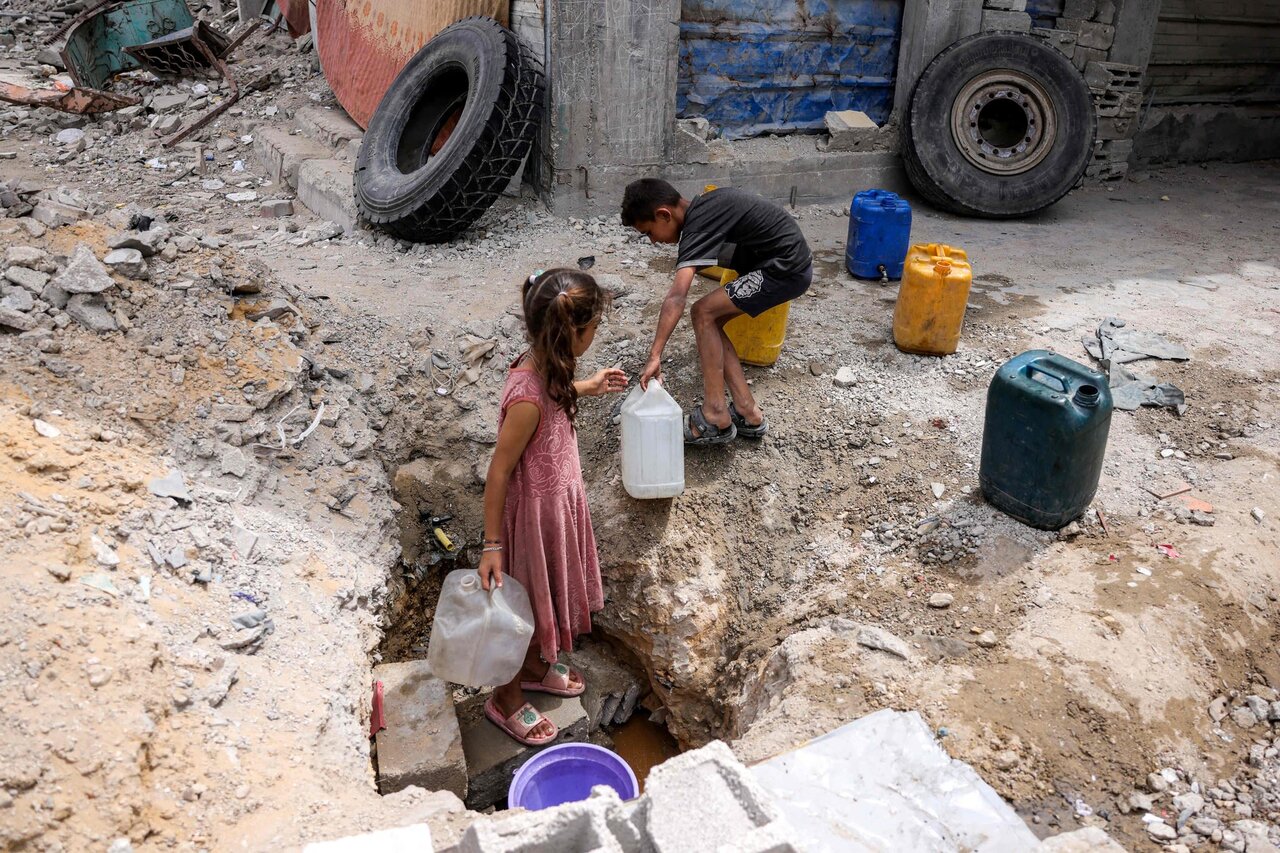
According to reports from Gaza, the main reason for the increase in these illnesses is the water available amid the genocide. Palestinians in Gaza obtain water from several sources, including groundwater and deep wells, desalination plants, and water supplied via an Israeli company called Mekorot.
Numerous laboratory tests have found that water from these sources is unsuitable for drinking. This is particularly due to the methods used to collect and transport it, as well as the containers in which it is stored. These practices often fail to meet basic safety standards and do not satisfy the minimum requirements for safe consumption.
Palestinian doctors argue that the contamination of water across Gaza is deliberate. They attribute responsibility to the IOF, pointing to previous incidents in which, sources of clean drinking water were repeatedly targeted during the genocidal war.
More than 90 percent of the water wells have been deliberately destroyed and subsequently filled in after the generators powering them were destroyed. Most desalination plants have also been destroyed by bombardment and explosions, particularly in Gaza City and northern Gaza.
In addition, the IOF controls Mekorot water-supply lines, giving it significant control over the quantity of water entering Gaza, as well as its quality and suitability for consumption by residents of the Strip.
Water contamination and the resulting health problems are compounded by a severe shortage of medicines needed to treat these conditions, particularly those used to treat H. pylori infections.
Such medicines are extremely difficult to find in either medical centers or private pharmacies. This has raised questions about whether the occupying regime is deliberately preventing these medications from entering Gaza at a time when they are urgently needed.
The problems facing the Gaza Strip are increasing in both scale and severity amid measures by the Israeli regime that, critics say, are aimed at continuing its genocidal campaign against Palestinian civilians through new methods. These methods could make it more difficult to establish legal and criminal responsibility for the resulting crises and humanitarian consequences.
All of this underscores the importance of an impartial international investigation into the actions of Israel and war crimes committed in Gaza. This is particularly important as the regime continues its blockade of the Strip and bans international investigative committees and foreign journalists from entering.
This amounts to an attempt to conceal crimes, most of which have yet to be documented. Exposing them requires all parties to use every available means to establish the facts and ensure that war crimes are investigated. Campaigners are calling for every possible effort to prevent further harm or, at the very least, to limit the catastrophic consequences for the Palestinian population suffering in Gaza.
Disclaimer : This story is auto aggregated by a computer programme and has not been created or edited by DOWNTHENEWS. Publisher: tehrantimes.com