As war spreads and old institutions stall, Beijing is emerging as the key venue for crisis diplomacy and great-power talks
By William Jones, a special commentator for CGTN, is a former Washington bureau chief for Executive Intelligence Review News Service and a non-resident fellow of the Chongyang Institute for Financial Studies
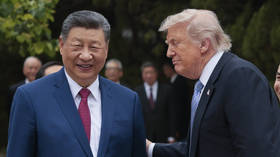
After US President Donald Trump’s state visit to China, Russian President Vladimir Putin will arrive on May 19 to meet with Chinese President Xi Jinping. Given the flurry of visits by foreign leaders to Beijing this year, it is clear that Beijing has become the place to go to for resolving major problems which have become intractable for traditional international institutions.
Trump’s visit from May 13 to 15 has undoubtedly done more to reset China-US relations than all the discussions conducted over the last nine years between delegations and representatives of both nations. More than that, it presented a real possibility of reshaping the relationship from rivalry to genuine partnership.
”Great changes unseen in a century” is the phrase often used by Xi to describe the present period of world history. This characterizes the turmoil in the world today and the abject failure of traditional institutions to deal with that turmoil.
A war in the midst of Europe well into its fourth year, Israeli attacks on Gaza, and the unprovoked attack on Iran by the US and Israel have all been repeatedly debated and discussed in the United Nations General Assembly (UNGA) and the UN Security Council, but with no resolution.
Some nations are moving away from seeking multilateral solutions to overriding problems and showing greater unilateralism and protectionism in the realm of trade and investment. Some have increasingly decided to go their own way without considering the interests of their neighbors. And the resulting rise in political tensions has seen more nations seeking destructive weapons, jeopardizing the treaties put in place to limit the possession of nuclear weapons and prevent their use.
In many respects, the fabric of the international norms and principles established in the aftermath of World War II has been seriously undermined, creating a basis for greater conflicts, including even a possible conflict between nuclear powers. The failure of many nations this year to commemorate the end of WWII indicates the principles established in the past to prevent new wars are being increasingly ignored and abandoned.
Disclaimer : This story is auto aggregated by a computer programme and has not been created or edited by DOWNTHENEWS. Publisher: rt.com